
SWS Workflow
The design journey of a SWS sewing pattern & exciting updates

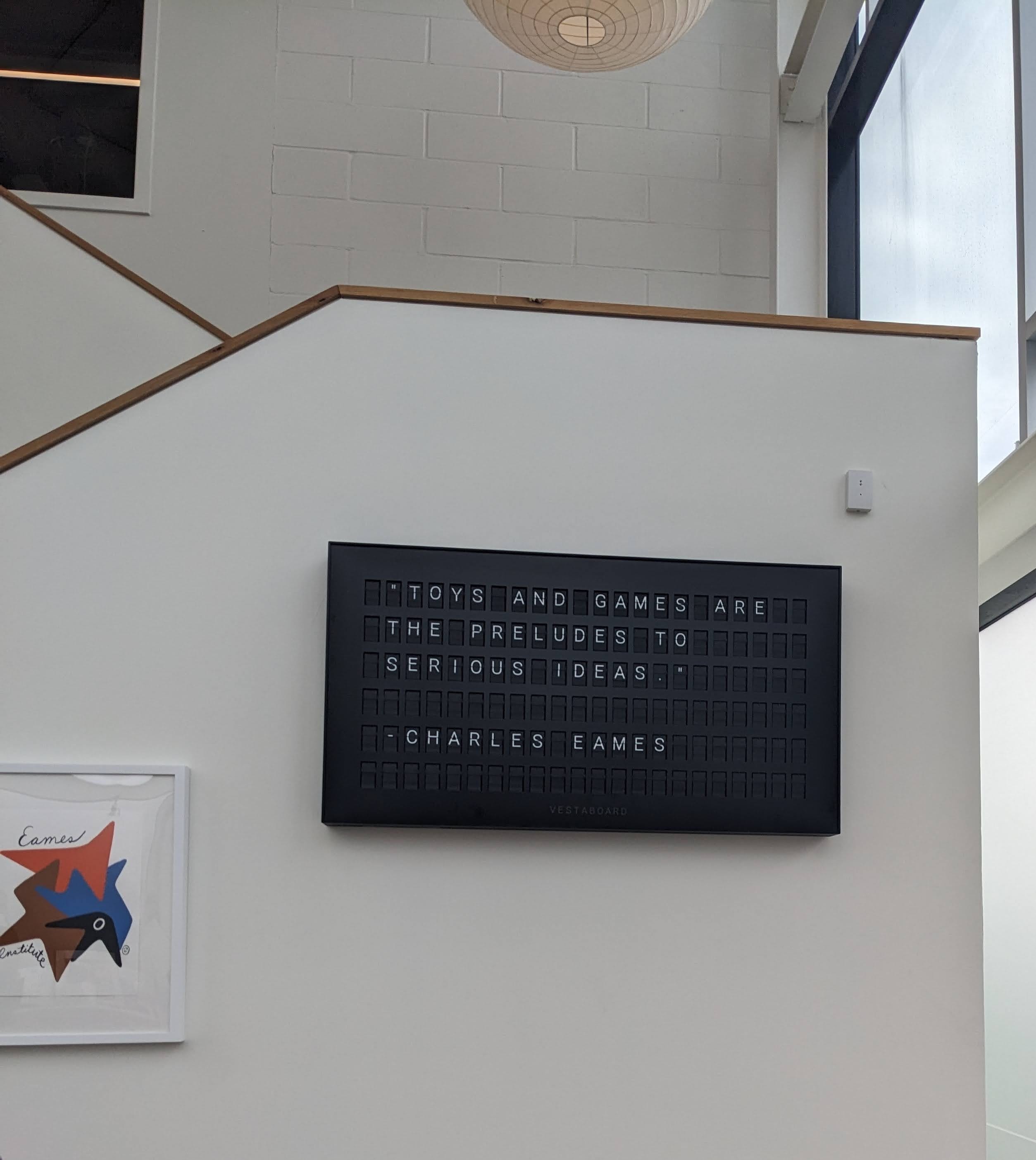
Two years ago, I took my Valentine on a tour of the Eames Archive, which left a significant imprint on the energy and thoughtfulness I apply to my design process for Spaghetti Western Sewing patterns.


If I had to choose just one lasting idea (I have an incredibly long brain dump in my phone, I typed up exactly two steps after exiting the tour, which I refer to often), it would be that good design is simultaneously very serious and impossible without playfulness. I find those two very difficult to balance, which creates a very torturous and addictive interior monologue. I overthink and am too aware of Reddit chatter*, which I think dials down the patterns I’m willing to pursue. At the same time, I perseverate on every tiny detail and build entire personalities and auras around each of my patterns, which (I think) results in a really fun final pattern, but is very draining and a bit melodramatic for a $12 PDF product.
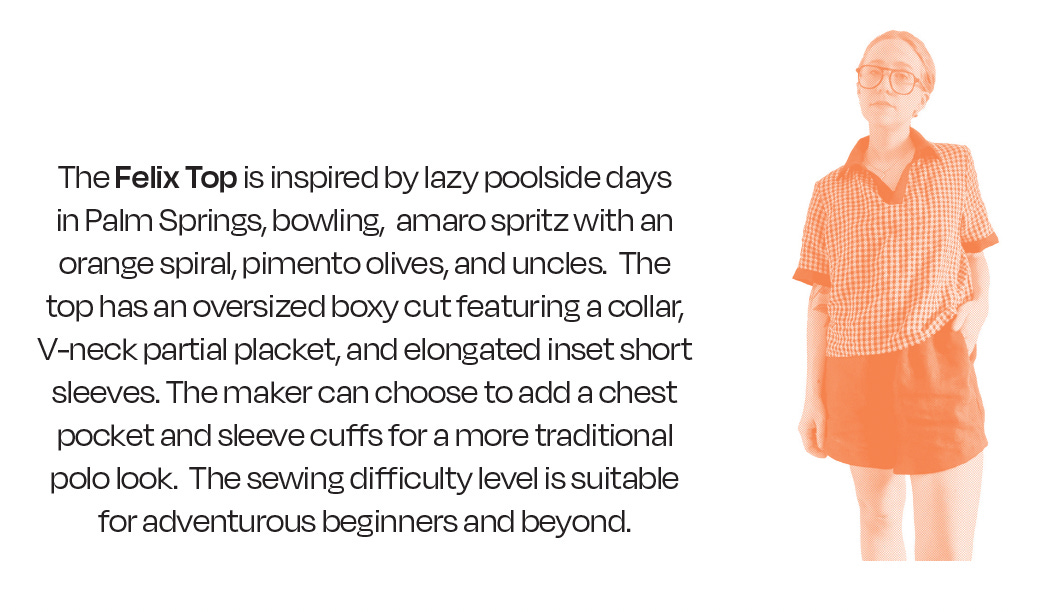
After every new Spaghetti Western pattern, I vehemently proclaim this is my last, and everyone who knows me laughs good-naturedly, knowing I’ll pull my head out of my ass sooner or later and find something new to fixate on. I’m trying to shift my mindset a bit on this front to see if I can help myself feel a little less emotionally wrung out by each pattern. We’ll see how that evolves; maybe it’s a necessary evil to my creative process.
*I don’t actually read the Craft Snark Reddit thread because it makes me feel like I’ve been violently ejected back to 2005 gossip circles. I have enough unadulterated anxiety from my own brain thankyouverymuch. I do recognize that there are some very valuable aspects of the thread, and many people love it, though. I respect that it exists and serves a purpose, and also, you will never find me filling my head with anonymous snark on Reddit. I’m too fragile a flower for that.
The Secret Sugo to a Spaghetti Western pattern.


The more I work through my own design process, the more I hunger to pull back the curtain to see how other artists and creatives navigate the murky space between idea and art. In light of this design thinking anniversary, I thought it might be fun to share how an idea becomes a Spaghetti Western pattern!
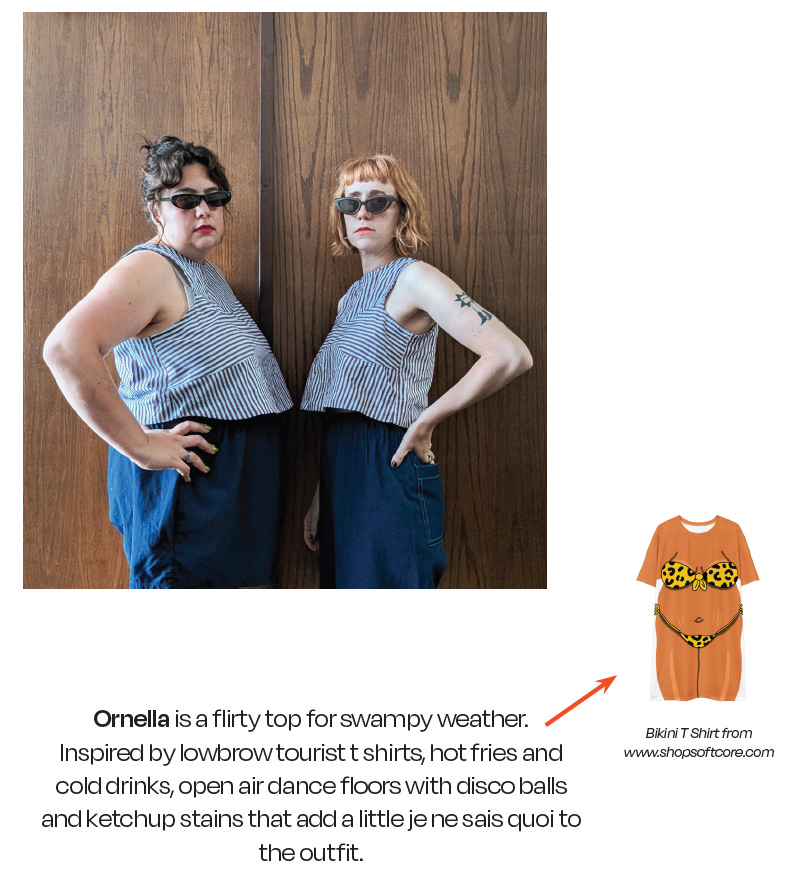
To start, I am terrible with realistic production timelines, but I do attempt to consider them. I work a full-time job in education and have three kids, so my drafting time is precious, fleeting, and never enough. I think on average, it takes me about a year from a pattern idea approval to release. Picture that cliche glacier infographic of all the work that comes before a pattern is ready to test under the water, and testing & pattern release the tippy top bit above the water. The next pattern I’m working on is a kid’s pant pattern co-designed with my oldest son. I sewed the first toile in August 2024, when he started kindergarten, and we have been wear-testing and tweaking it well into 2nd grade. It’s not that the pattern is difficult to create; it’s just that ideas and possibilities aren’t done simmering yet. We haven’t fully formed our taste & opinions for this design idea, and that’s just how it goes. In contrast, the idea for Ornella popped into my head in March while listening to Love to Love You, Baby on my way to work, and dreaming of summer. I had planned to bust out the pattern the first week of April on my Spring Break and run the test while on maternity leave, while waiting to give birth mid-May, but my son ended up coming 7 weeks early. I still managed to sew the first toile in May, and release it in September, though. I have yet to be able to accurately plan and release a pattern seasonally appropriately to my hemisphere, although I think I get a pass for Ornella. My husband and I joke, “SWS is big in Australia,” because my releases tend to line up with their seasons much better, and that works just fine for me.
Idea Soup
I currently have 304 images in an album on my phone called “drafting inspo” with the earliest image dated 11/11/2020. It is a huge jumble of sources, anything from vintage advertisements to the actual insides of a ready-to-wear garment with an interesting construction detail. There are certain design details that always catch my attention, so I have many pictures of slight variations of things like my favorite collar styles or interesting use of elastic cinching. Sometimes I have a loose idea of a full garment I’m interested in drafting someday, and sometimes it’s a small detail I have no idea if or how it will eventually slip into one of my patterns. Sometimes something seemingly random catches my attention, and I snap a picture only to realise that I’ve been collecting similar images subconsciously for months. When I get in a creative funk, I visit this visual soup of ideas to see what catches my energy in that moment and remind myself of the limitless options I’ve already amassed.
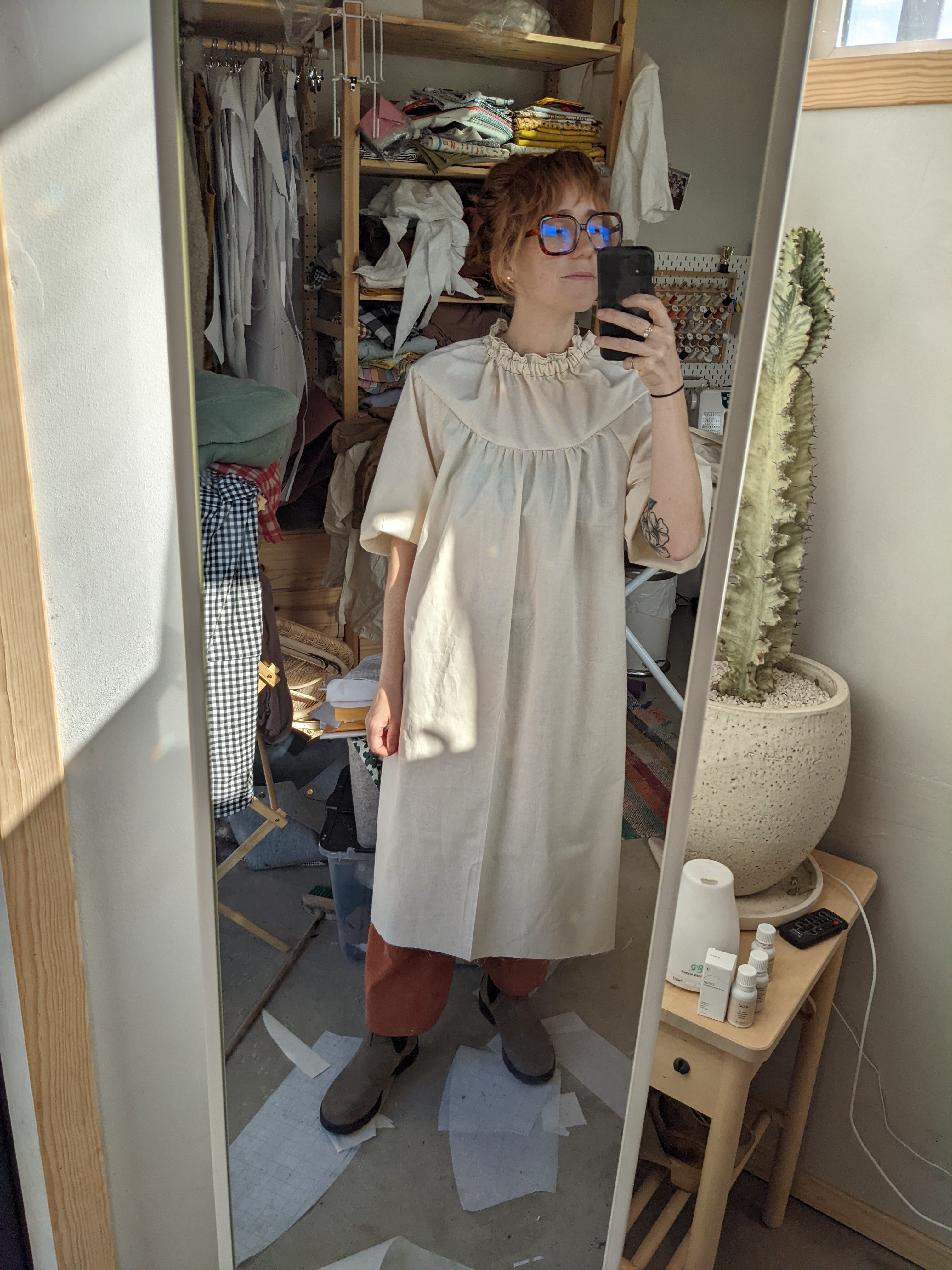
The next part of the process is filtering out ideas. I am a self-taught pattern designer who started as a home sewist, so my biggest considerations are:
Is it fun to sew, and am I excited about the design challenges it poses?
Do I have the technical skills to pull the idea off?
I’m very comfortable drafting any garment for myself, but I feel a very heavy responsibility to deliver high-quality, inclusively sized designs to customers. Drafting is a skill and an art, and while anyone can follow a formula and self-draft something, I think it takes a bit of alchemy to design a garment destined to become a pattern for a wide variety of bodies and sewing skill levels. This adds a huge number of variables to the design equation, which requires a different knowledge base and skill set. It’s my opinion that formal education isn’t strictly necessary to create great patterns, but a healthy dose of self-awareness and caution as a non-traditional designer is absolutely warranted. I get better and learn more with every pattern I release, but there are still a significant number of ideas and designs that are just outside of what I feel comfortable pushing forward at my current experience and skill level.
I don’t intend for pattern designing to be a full-time career for me, but if I did, I would pursue formal education to build my technical drafting skills. Learning new techniques in a structured educational environment and having open access to professionals and peers in the fashion industry would be a huge opportunity to grow and open so many doors. Heck, I would do it just for fun if that was a feasible option! I am also curious to learn more about industry standards and practices, including garment fabrication. I don’t think that expertise directly translates to home sewing patterns, but it would be very interesting and certainly doesn’t hurt! Where are the job shadow/internship opportunities for moms with full-time jobs in other fields?
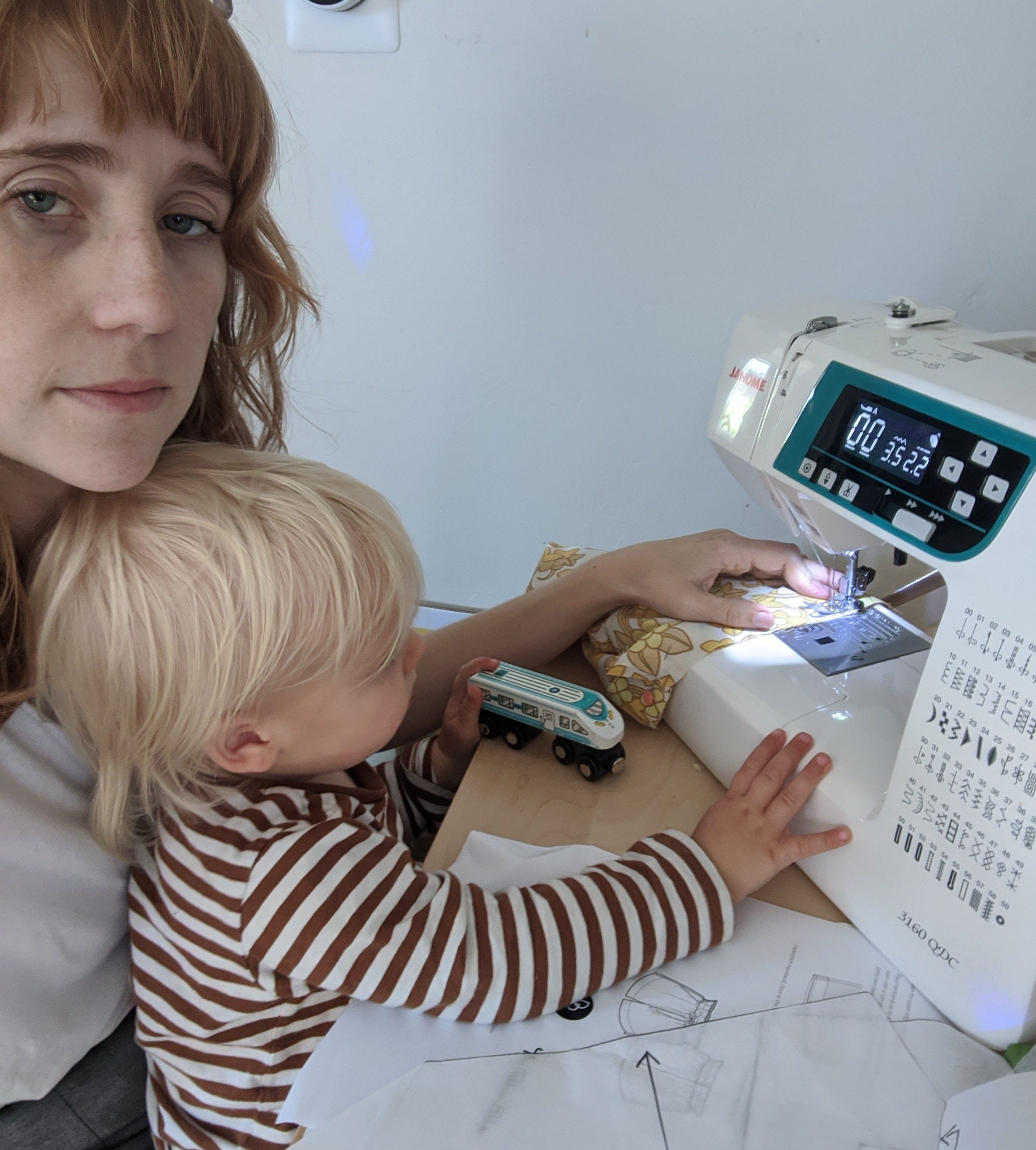
Coming from a home-sewing background comes with some advantages, though! I was never formally taught the rules, expectations, and biases that come with syllabized instruction, so I make rookie mistakes but also rookie wins, too. I know what it’s like to be a beginner with limited time and resources. I know what it’s like to cut fabric on a dining room table and fight animals and kids to get your notions back. I know the types of construction details that are fun to sew on home machines as a novice, and which will make you rip your hair out. I take great pride in making sure the experience of sewing a Spaghetti Western pattern is fun and accessible to a variety of skill levels. I like to think of my patterns as “unfussy,” meaning you don’t need a great deal of precision for a nice final garment. Those are my favourite garments to sew and the ones I tend to wear the most too. I also want my patterns to be in heavy rotation in your wardrobe. This means there are some more boxes for an idea to check before it moves forward. These are the next questions I ask myself:
Can you think of 3-5 versions of this garment you’d wear regularly?
Does this pattern have design flexibility for fluctuating bodies?
Will this pattern feel good and grade well for body types other than mine?
Can you think of 5-10 outfits/stylings for this garment?
Are there at least 3 occasions/places you would wear this garment?
Does a pattern like this already exist? If so, why is this one different and necessary?
Is there room to encourage the maker to use their own creativity and hacks with the design?
If the garment passes these questions, I start to sketch out a couple of different variations and brainstorm construction options. I search for existing patterns using Google, Etsy, and Threadloop. I also post on my Instagram stories to make sure I’m not missing any. Luckily, I haven’t gotten this far with a pattern idea and then found something already out there in the pattern world. If the garment has a singular direct inspiration (either vintage or ready-to-wear), I research to find as many similar styles of garments as I can, usually on Pinterest and keyword/image Google searches. I collect other inspiration sources, often scrolling through my “drafting inspo” album to see if there are any fun construction details I have squirrelled away that would play nicely with the design. I also order vintage patterns on Etsy to reference for a variety of style lines and construction details. I note the differences and similarities between all of these and start to Franken-design.
I started drafting by hand, then challenged myself to learn to draft digitally. Since releasing Juno, my patterns have been designed fully digitally, which saves a lot of time. It has allowed me to realise that I enjoy the process so much more by hand! I’m reverting to a funky blend of the two for my next patterns, which will be a new, fun way to play.
Once a pattern gets past the idea soup, R&D, checklist, and franken-design, it enters the production phase, which is much less alchemy and much more business. This involves piles of toiles, grading, fit testing, instructions, illustrations, open testing, sewing samples, photoshoots, and finally, pattern release. By that time, I never want to see my pattern AGAIN. I’m usually mentally and emotionally exhausted and far too close to every tiny detail to make sense of my true thoughts and feelings. Although I continue to enjoy wearing my patterns on heavy rotation, I need a good, long break from the process. It certainly doesn’t help that the majority of my time working on my patterns is 9 pm-12 am after my kids are tucked into bed and a full day of my 9-5 job is behind me.
Big Changes at SWS Headquarters!
Starting this month, I will have one M-F day of the week dedicated to Spaghetti Western Sewing projects for the first time! This change is four years in the works. Living in the SF Bay Area, it was a financial non-negotiable to be able to pay myself for the 8-hour day of pay I’d be missing. Knowing how fickle social media algorithms are, and as a business that relies almost entirely on Instagram, it’s taken me a really long time to feel comfortable taking this step. We’ve all witnessed many small beloved brands forced to close, and influencers dive into full-time influencing only to find they’ve flown a bit too close to the monetization sun. I take this step with an abundance of caution and the mindset that these daylight hours are primarily to give my brain some space to breathe. Although it was never explicitly part of my dreams or plans, I am so grateful and proud to be able to do this.
I don’t anticipate this time will speed up my process, but rather allow me to spend unrushed time and energy on my ideas. I have several pattern projects already in the works (both garment and quilt!), and pattern ideas yet to enter the next phase, which I’m excited to work on. I think I’m most excited to have time to sew new versions of my old patterns and work on a new way to share them on a variety of bodies and styles. I’m excited to revisit and rethink small details; maybe some updates or expansions will be released. I’m eager to find new ways to sew and wear old stuff. Maybe I’ll do some garment sew-alongs or hack guides for you all here. I can’t wait to have time to draft and sew just for fun to see what comes out. Extra time for drafting by hand and some freestyle draping. Maybe I’ll finally make a dent in my fabric stash! I’m entering my eccentric heirloom era and hope to emerge with a ridiculous vintage cartoon character villain wardrobe and catalogue of patterns to match.
I absolutely loved this deep dive into your creative process! I have yet to make an SWS pattern because around the time I discovered your work, I also realized sewing was not bringing me joy. Your description of the home-sewing experience (dining room cutting table, fighting with animals and children for notions, etc etc) has reignited my interest in reaching for a sewing pattern — one of yours! We’ll see if that manifests for me, but as a creative with a full time job not directly related to creative making, I really appreciate this insight into how creative projects can happen — over time, with patience, in snatches — however it needs to. I’m excited for you to have your one paid day a week to work on SWS and hope it brings some joy to your process.
This was so interesting to read! I loved learning about your process and how thoughtful and considered it is. So happy for you that you get a SWS day each week now, and as someone who's kids are all grown up now (and I still struggle to find the time to sew) I can understand how hard this was to accomplish!